This post may contain affiliate links. I may earn a small commission if you click and make a purchase, at no extra cost to you.
Sorting Children’s Clothing Made Simple
Sorting children’s clothing can feel like a full time job, especially when little ones grow faster than you can wash and fold. Between hand me downs, seasonal items, baby sizes, sentimental pieces, and clothes that seem to leapfrog from “fits perfectly” to “way too small,” it can be hard to keep everything organized. That is why having a clear system for sorting children’s clothing is essential. Not only does it save time and prevent clutter, but it also makes daily life, laundry cycles, and getting kids dressed so much easier. With simple strategies, free printable labels, and a few helpful tools, you can create a clothing storage plan that works for your home and grows with your kids.

This newly updated guide is inspired by the free clothes stickers originally shared on Mimi’s Dollhouse, now paired with modern tips for decluttering, organizing, storing, and rotating kids’ clothing. Whether you are sorting baby clothes, preschool wardrobes, or growing kid gear, these helpful systems will simplify your routines and bring calm to your closets. From building easy capsule wardrobes to recognizing when your baby needs a bigger size, from dressing kids for changing seasons on a budget to using printable labels that actually work, this post will walk you through practical steps to transform your home into a smooth running, clothing-organized machine. And the best part? It all starts with simple tools you can print at home.
The idea behind these free clothes stickers began as a personal project during a big clothing reorganization session. After sorting endless bins, baby outfits, and little girl dresses, I realized how much easier the whole process became once everything was labeled clearly. You do not realize how much time you waste digging through unlabeled containers until you finally create a system that works. Using color coded labels, creating consistent categories, and sorting by size, season, or child makes a world of difference.
The stickers are bright, colorful, and easy to read, which makes them perfect for long term storage bins, drawer organizers, closet cubbies, and even hanging dividers. You can mix and match labels if your bins contain multiple sizes or simply assign a single size per bin. They help streamline your clothing rotation, make hand me downs easier to find, and ensure you never forget about items your child has outgrown or has yet to grow into. And of course, they make the actual process of sorting children’s clothing so much faster.
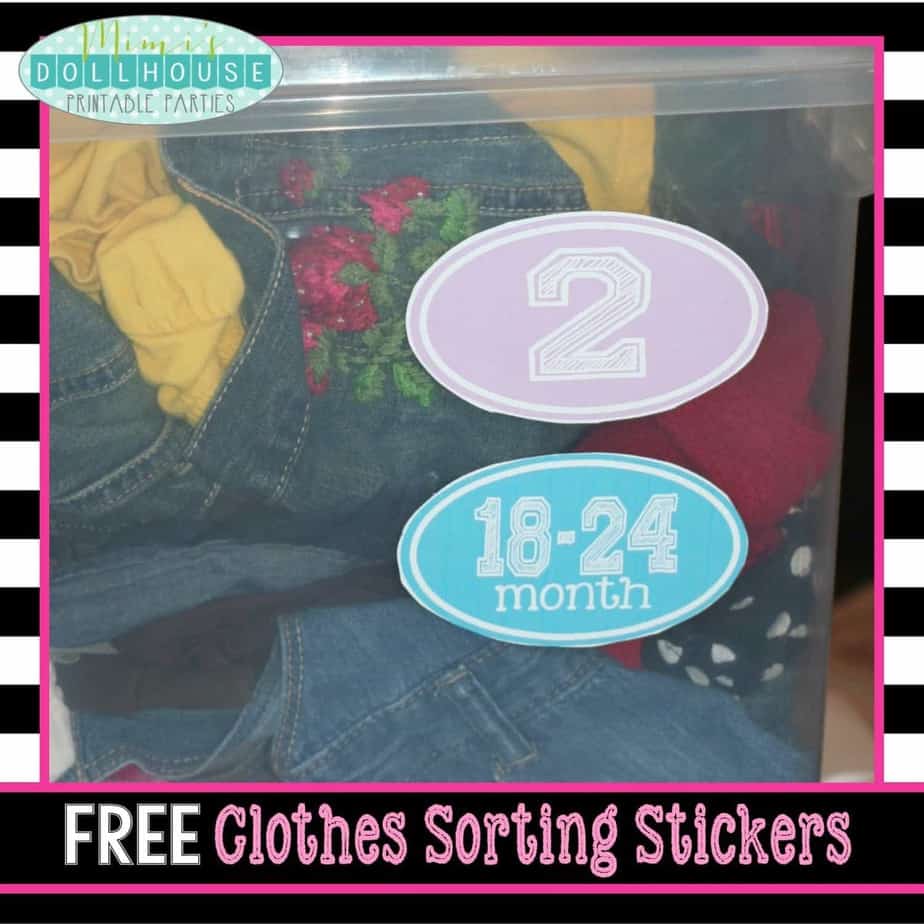
These free printable clothes stickers come in a fun rainbow color scheme, making it easy to assign colors to sizes, seasons, or clothing categories. You can use them individually or layer multiple stickers on larger bins that store a wide range of items. No matter how you use them, these labels will drastically reduce the time spent searching through clothes. They are especially helpful for parents managing several kids, parents storing baby clothes for future siblings, and families who rotate seasonal clothing in and out throughout the year.
Sorting Children’s Clothing
Sorting children’s clothing is more than just folding and stacking. It is about creating a functional system that helps you stay organized during the constant cycle of kids growing, seasons changing, and wardrobes rotating. A good sorting system lets you know exactly what you have, what you need, and what no longer fits. It saves money, reduces clutter, and keeps your child’s wardrobe manageable no matter how many pieces you own. With a few simple strategies, you can completely transform the way you manage children’s clothing, making it easier to dress your kids, easier to store items, and easier to pass things down.

Start by sorting clothing into three main groups: items that fit now, items that are too small, and items your child will grow into soon. The free clothes stickers from Mimi’s Dollhouse work perfectly for labeling future sizes or storage containers. Once your foundational categories are established, expand your sorting to include subcategories like pajamas, school clothes, church outfits, everyday wear, dress clothes, seasonal items, and sentimental keepsakes. Having clear categories makes putting laundry away faster and helps kids learn where their items belong.
Photos of the organization process can help you visualize how to break your sorting tasks into manageable steps. Use bins, baskets, drawer dividers, or hanging organizers to keep everything in place. If you are sorting baby clothing, consider using size specific dividers like “newborn,” “three months,” “six months,” and so on. For older kids, categorize by activity or school need rather than size alone.
Below are details inspired by the original post photos, showing bins filled with bright rainbow labels, neatly folded clothes, and color categorized tubs. These images can guide your own approach to creating a beautifully organized clothing system.
Helpful Tools for Sorting Children’s Clothing
Having the right tools makes sorting children’s clothing significantly faster and easier. From clear plastic bins to downloadable labels, every tool you use should serve a purpose: to contain, categorize, and simplify. Start with durable storage bins for long term items, like outgrown clothing or keepsakes you want to save. Drawer organizers help manage small clothing pieces such as socks, underwear, and accessories. Hanging dividers separate sizes or seasons directly in your closet. And of course, printable labels are essential for keeping everything clearly marked.

Take inventory of what you already own. If you have mismatched bins, consider assigning each child a color so you can quickly see whose items are where. Add the free printable clothes stickers to the front of each bin, making sure the labels are visible when stacked or stored. Use smaller containers for shoes, swimwear, or specialty items. And keep a dedicated donation basket and “growing into” bin so you can maintain the flow of clothing as your children grow.
One of the most helpful tools for sorting children’s clothing is the use of portable caddies and rolling carts. These are excellent for storing items currently in rotation, especially if you have multiple kids sharing spaces or if you rotate seasonal clothing frequently. Rolling carts allow you to keep socks, underwear, pajamas, or school clothing within easy reach and can move from bedroom to laundry room as needed. Add clip-on labels or attach printed stickers from the Mimi’s Dollhouse free clothes sticker set to keep every drawer and compartment clearly marked.
Another essential tool is a consistent labeling system. This is where the free printable clothes stickers truly shine. Their bright rainbow colors help you categorize clothing at a glance. You might use red labels for baby clothing, orange for toddler clothing, yellow for sizes to grow into, green for seasonal wear, and blue for hand me down storage. Color coding makes your bins visually intuitive and easy to maintain. It also simplifies the process for partners, babysitters, or older kids helping with laundry and clothing storage. When everything is clearly labeled, everyone knows exactly where things belong.
Tips and Tricks for Sorting Clothing
Sorting children’s clothing becomes dramatically easier when you adopt a few consistent habits. Begin by scheduling a regular clothing review, ideally every season or whenever your child goes through a growth spurt. During each review, empty drawers and bins completely so you can assess every item. Create four piles: keep, donate, save for sibling, and trash or repurpose. This prevents your storage from becoming overcrowded with clothing your child no longer wears or items that have lost their usefulness.

When organizing the “keep” pile, group clothing by both purpose and frequency. Place items worn daily—like t shirts, leggings, pajamas, and socks—in accessible drawers or bins. Dressier items, seasonal clothing, or special outfits can be stored higher up or placed in labeled bins using your free stickers. If your child attends school or daycare, consider creating a special school drawer with uniform pieces, comfortable play clothes, or extra outfits to simplify your morning routine.
Photos from the original post show plastic bins labeled with bright rainbow stickers, each clearly identifying sizes or categories. You can recreate this approach by using stackable bins, adding printed labels, and sorting clothing by size. When reorganizing multiple children’s wardrobes at once, assign each child a designated bin color to prevent mix ups. This visual coding keeps sorting children’s clothing simple and prevents frustration, especially during busy seasons.
Always include a dedicated “Grow Into This” bin. Kids grow quickly, and having a place to stash larger clothing prevents clutter and ensures you are ready for future changes. Incorporate a donation bin as well, so clothing that no longer fits can move out of your home without delay. With these simple tricks, sorting children’s clothing becomes manageable and even enjoyable.
How to Build a Capsule Wardrobe for Kids
Building a capsule wardrobe for kids is a fantastic way to simplify sorting children’s clothing and reduce daily stress. A capsule wardrobe is a carefully curated collection of mix and match pieces that work for multiple occasions. The goal is to minimize excess clothing while still giving your child plenty of outfits to wear. For kids, this means choosing comfortable pieces that can be layered, swapped, and reimagined easily.
Begin building a capsule wardrobe by identifying your child’s most worn items. These usually include basic tees, leggings, jeans, solids, and neutral pieces that can pair with almost anything. Add seasonal layers, like cardigans, sweatshirts, or light jackets, depending on your climate. Stick to a consistent color palette so everything works together. If your child likes bright colors or patterns, incorporate them as accent pieces rather than wardrobe staples to keep your capsule functional.
Once you define your capsule wardrobe pieces, sort any extra clothing into storage bins and label them with the free clothes stickers. Excess clothing can be saved for a younger sibling, donated, or rotated seasonally. The beauty of a capsule wardrobe is how easy it makes mornings. Your child can choose any top and bottom and walk out the door looking coordinated. It also reduces laundry stress and prevents unnecessary shopping because you know exactly what your child truly needs.
Photos from the original post highlight the effectiveness of categorized bins, which pairs beautifully with a capsule wardrobe structure. With fewer clothing items in circulation, your drawers stay cleaner, your bins stay organized, and sorting children’s clothing becomes significantly easier.
How to Tell When Your Baby Needs a Bigger Size
One of the trickiest parts of parenting is knowing when a baby needs a bigger clothing size. Babies grow rapidly, and their growth does not always align with standard size charts. That is why keeping an eye on fit, comfort, and movement is essential. The easiest signs that your baby needs a bigger size are tightness, pulling at the neckline, sleeves that hike up, or snaps that refuse to close. If diaper changes become difficult because clothing fits too snugly, it is time to size up.
Another helpful tip is to evaluate footed pajamas. If your baby’s toes are pressing against the ends or stretching the fabric, they need a new size. Fabric that pulls tight horizontally across the chest or belly also indicates that the piece is too small. Babies need room to stretch, crawl, wiggle, and nap comfortably. A good general rule is to size up sooner rather than later. Babies are rarely uncomfortable in clothing that is a little big, but they can quickly become uncomfortable in clothing that is even slightly too small.
Sorting children’s clothing regularly helps you stay ahead of sizing needs. Whenever you notice a few pieces becoming snug, pull out your next size bin, which you have already labeled using the free clothes stickers. This makes transitions seamless and ensures your baby always has well fitting clothing available. Clear labeling keeps this process quick, especially when you are juggling multiple children or storing a mix of hand me downs.
Dressing Babies for the Weather on a Budget
Dressing babies for changing weather can be challenging, especially when you are trying to stay on budget. Babies often need multiple layers, soft fabrics, and comfortable fits that adapt to different temperatures. Instead of buying an entirely new wardrobe each season, invest in versatile pieces that can be layered. A base layer like a cotton onesie can be paired with leggings, a sweater, or a sleep sack depending on the temperature. Neutral bodysuits are incredibly helpful because they match with everything and minimize how many new pieces you need each season.
Transitioning between seasons becomes easier when you sort clothing by weight and fabric. Keep fleece, heavy cotton, and wool in labeled winter bins, and store lighter items like short sleeves and muslin outfits in separate spring and summer bins. Using the free clothes stickers to categorize each bin makes seasonal rotation simple and fast. Before each weather change, review your current size bin and pull out the pieces your child will need for the next three months. This prevents last minute shopping and keeps you from buying duplicates.
Look for sales and secondhand options to stretch your budget further. Babies tend to outgrow clothing faster than they wear it out, so gently used pieces are often in excellent condition. Build a small capsule wardrobe for each season and only supplement with specialty items as needed, like snow suits or sun hats. Sorting children’s clothing into clearly labeled bins makes it easier to track what you own, what you need, and how to dress your baby comfortably without overspending.
Download the FREE Organization Stickers
Here are the stickers to download. You can click on the pictures for the JPEG version or the link below for the PDF version.

 Download the FREE Clothes Sorting Stickers.
Conclusion for Sorting Children’s Clothing Party Ideas:
Sorting children’s clothing is not just a chore. It is a system that dramatically simplifies family life when done thoughtfully. When every tiny shirt, favorite pair of pajamas, seasonal jacket, and sweet hand me down has a clearly labeled place, your home instantly runs more smoothly. You spend less time digging through piles, less money rebuying items you already own, and far less energy wondering where things should go. A functional clothing system gives you back your time and your sanity, especially during those seasons when your children outgrow clothes at lightning speed.
One of the most powerful tools in this process is consistency. Using the same style of bins, the same color coding system, the same stackable containers, and the same printable labels helps you maintain order over time. The free clothes stickers make this incredibly easy. Their rainbow color palette, bold size markers, and user friendly design allow you to build a system that is both attractive and practical. Whether you are storing infant outfits for a future baby, organizing toddler clothing for daily wear, or managing a whole mix of sizes for multiple children, these labels keep everything running smoothly.
A well organized clothing system also helps you track what your child has outgrown, what they need next season, and which items you want to save for sentimental reasons. Sorting children’s clothing becomes a proactive, thoughtful process instead of a rushed reaction to clutter. You know exactly when to replace items, when to rotate bins, and when to pull out the next size. This makes parenting feel lighter. No more last minute panics before school when nothing fits or frantic searches for shorts in January.
Sorting children’s clothing also creates a beautiful framework for building capsule wardrobes for kids. When you can see every piece clearly, you naturally buy more intentionally. Your child gets dressed more easily, drawers stay neater, and laundry becomes much more manageable. Thoughtful sorting means you are no longer drowning in tiny outfits. Instead, you are curating a practical, functional, and joyful wardrobe for each season of childhood.
Whether you are a new parent trying to understand baby sizes, a busy mom juggling multiple kids, or a sentimental saver who loves preserving special pieces, sorting children’s clothing is a gift to your future self. With simple tools like free printable labels, consistent storage methods, color coded bins, and seasonal rotation routines, your home can feel calm, organized, and intentional each and every day.
If you love these ideas, please pin this image to your Sorting children’s clothing Pinterest Board:

Related posts for Resources for Homeschooling Preschoolers:
- Free Printables for Homeschool
- Wimmelbooks Review for Preschool
- How to Entertain Kids when you are stuck Indoors
- Hands On Science and Math Boxes for Kids
- Beautiful + Functional Teacher Planner from Erin Condren
- Teacher Classroom Must-Haves
- ABCmouse Review for Preschool Learning
- Kindergarten Show Me Science Review
- Teaching Preschool Science with The Berenstain Bears
- Using Play Smart Workbooks for Preschool
- Free Printables for Teachers!
- Back to School Hacks to save your sanity!
- Free Printables for Awesome Teacher Gifts
- Preschool Alphabet Crafts
- Back to School Themed Party
- DIY First Day of School Chalkboard Sign
- School Lunches your kids will actually eat
- Turkey in Disguise Ideas
